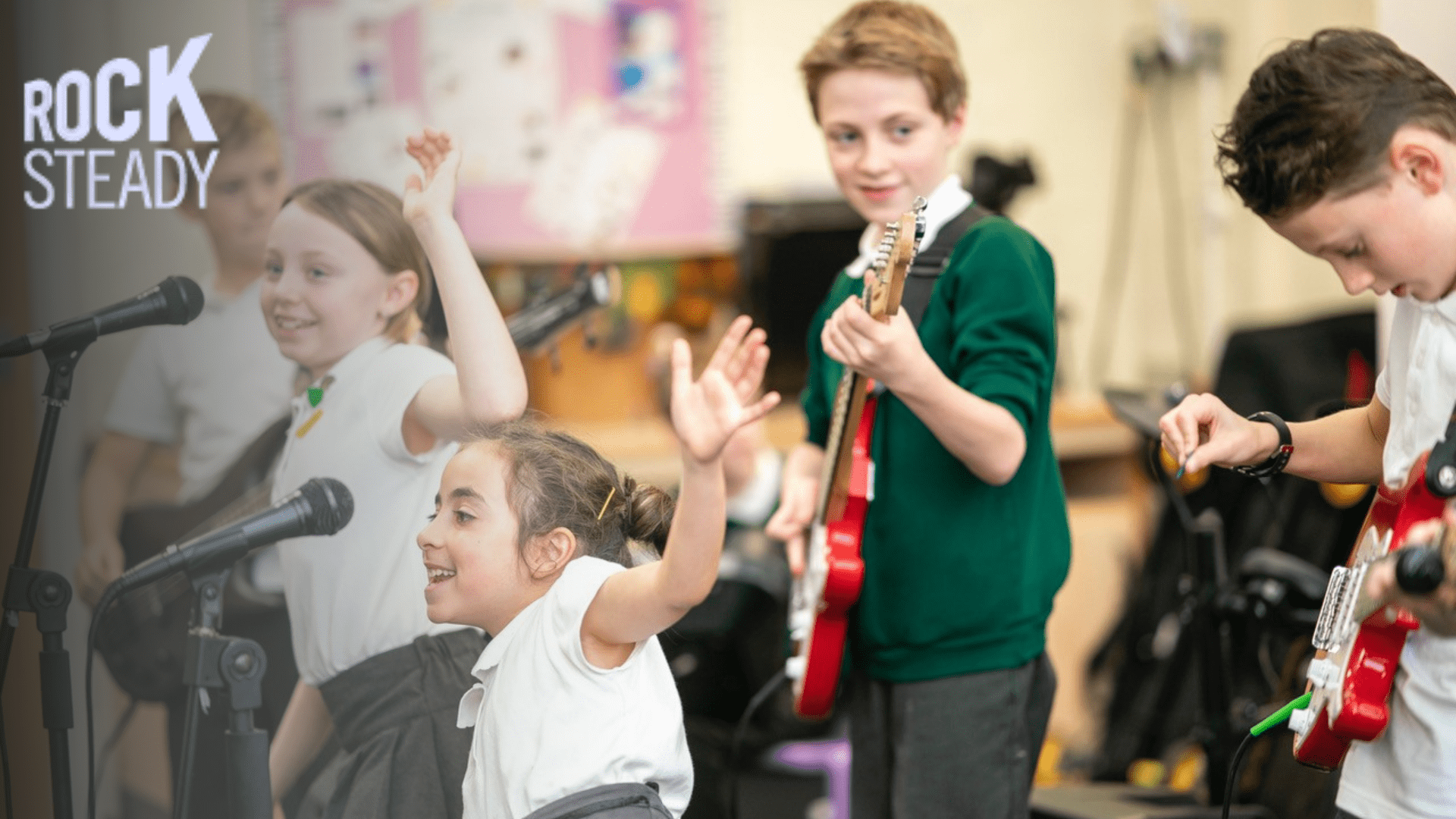

9 out of 10 Rocksteady children report they would like to continue doing music in secondary school.
New research involving nearly 10,000 children, parents and educators shows that inclusive, band-based music education in primary schools is playing a significant role in improving pupils’ primary school experience, as well as fostering a lasting passion for music that carries through to secondary school.
The findings, which focused on Rocksteady’s national band-based programme in almost 4,000 primary schools, showed that early access to peer-led music education contributes to children’s enthusiasm for the subject. 85% of Rocksteady alumni parents report their child now has a passion for music, with 86% of those stating that passion was sparked by their Rocksteady experience.
The research – which was published by Rocksteady Music School – gathered insights from 9,681 respondents, including 1,738 pupils and 513 teachers, making it one of the largest mixed-method studies into primary music education ever conducted in the UK.
Teachers reported that the programme – which prioritises child-centred and pressure-free learning – deepens children’s sense of belonging within the school community. 81% of pupils say their experience of school is better since joining Rocksteady lessons and 79% said it helps them to fit in – not in the sense that it makes them conform – but in that it helps them feel comfortable at school. One Rocksteady pupil said, “It makes me feel happy, like I’m with a family.”
This sense of belonging is reflected in children’s excitement to come to school, with particularly strong outcomes for children with SEND. Sadly, only 34% of children with SEND report feeling excited to attend school on a normal day (compared to 64% of children without SEND). However, this excitement for school rises to 96% on Rocksteady lessons days (almost equalling pupils without SEND on 97%). Rocksteady teaches children how to play an instrument as part of a band, developing instrumental, musicianship and performance skills. Every child enrolled in the programme can achieve an exam-free music qualification, accredited by Trinity College London – all by having fun and learning new musical skills along the way. These new skills are then showcased to a supportive audience of friends, family and teachers at Rocksteady’s end of term concerts.
The research also shows that taking part in the programme helps pupils make a more confident step up to secondary school by boosting self-belief, building resilience and strengthening social bonds through shared musical interests. 37% of Rocksteady alumni parents said their child’s experience in band lessons helped them transition to secondary school more easily.
This ignited enthusiasm for the subject is reflected by 66% of alumni pupils still playing an instrument in secondary school, with 81% of those still playing the instrument they learned with Rocksteady. One parent of a former Rocksteady student said, “It sparked a genuine passion for music, both playing and writing. Next year, my son will begin his GCSEs and I’m proud to say he has chosen music as one of his subjects.”
Taught by professional musicians who inspire a love of music and act as unique role models in schools, 9 out of 10 Rocksteady children reported that they would like to continue doing music in secondary school. Rachel Hawker, Chief of Education at Rocksteady Music School, said: “Every day we see the transformational impact that playing music in a band is having on children’s lives. It builds confidence, nurtures self-belief, strengthens teamwork, and fosters a genuine sense of belonging in school – all factors that meaningfully shape how children engage with their learning and wider school experience.
“It’s fantastic to see children who learned to play music in a band are continuing this passion for the subject into secondary school. We’re extremely grateful to the thousands of children, teachers and parents who shared their insights. Their contributions highlight why early access to music education matters, and why continued commitment to making it accessible for every child is so important.”
To find out more about Rocksteady Music School, visit www.rocksteadymusicschool.com.