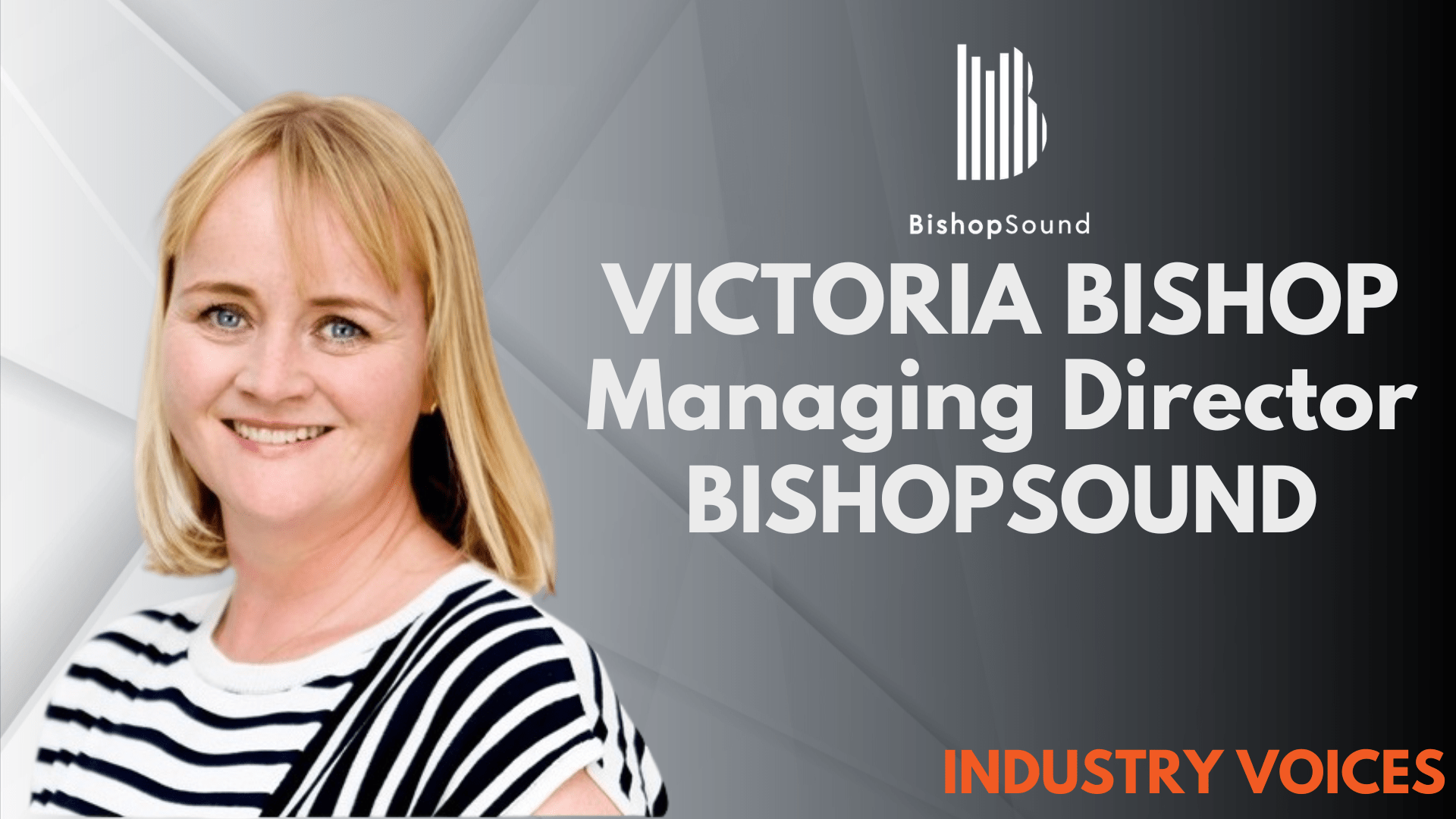

What does the future of British audio look like? According to BishopSound Managing Director Victoria Bishop, it’s repairable, transparent, sustainably built – and proudly manufactured in the UK. In this wide-ranging interview, Victoria shares her thoughts on leadership, innovation, women in audio, and why listening matters just as much in business as it does in sound.
1. Victoria, you’ve recently taken the reins as Managing Director of BishopSound. What has it been like stepping into this role while Andrew focuses on his Founder duties?
It’s been both exciting and deeply personal. Andrew built an incredible legacy in British audio. He took a leap when he purchased Carlsbro for £1 almost 26 years ago, joined the MIA and learnt great lessons from learned members. There is a real responsibility that comes with carrying that forward under the BishopSound banner. At the same time, it’s given us an opportunity to evolve the business with fresh energy and a clear long-term vision.
Andrew remains hugely involved from a founder and innovation perspective, which is invaluable, but my focus is on shaping the future of BishopSound operationally, culturally, and strategically. We work very collaboratively, and I think that balance between heritage and progression is one of our greatest strengths.
2. How do you see your vision for BishopSound evolving the company’s “British Sound” legacy?
For me, “British Sound” is about more than audio performance it’s about craftsmanship, integrity, innovation, independence and my new word “repairability”. I want BishopSound to represent a modern version of British engineering: world-class sound built responsibly, sustainably, and transparently.
We’re evolving the legacy by combining traditional audio expertise with forward-thinking manufacturing, repairability, lifecycle traceability, and digital innovation. We want customers to feel proud not only of how our products sound, but also of how and where they’re made.
3. The PA and audio industry has traditionally been male-dominated. How has your experience as a female MD shaped your approach to leadership?
It’s definitely given me a strong sense of resilience and perspective. In industries that have historically been male-dominated, you often learn very quickly that authenticity matters more than trying to fit a mould.
Its nice to get a few marriage proposals from overseas but I think Andrew might have a view on that!
My leadership style is collaborative, people-focused, and very hands-on. I like people to call me on the phone if they have a question. I believe in listening carefully, encouraging different viewpoints, and building environments where people feel respected and empowered to contribute. Diversity genuinely improves creativity and problem-solving, and in audio, creativity is everything.
4. What do you think the industry still needs to do to encourage more women into senior roles and technical positions?
Visibility is incredibly important. Young women need to see people like themselves working in leadership, engineering, manufacturing, and technical audio roles so they can imagine themselves there too.
The industry also needs to do more to break down outdated perceptions around technical careers. Audio engineering combines science, creativity, design, technology, and communication and that appeals to a far wider group of people than the industry sometimes reflects.
Mentorship, education partnerships, and inclusive workplace cultures all play a big role. It’s not about lowering barriers symbolically it’s about genuinely opening doors.
5. Sustainability is clearly central to BishopSound’s philosophy, from repairable products to Digital Product Passports. Why is this so important to you personally and to the company?
Because the industry can’t keep operating on a throwaway mindset. Professional audio equipment should be built to last, repaired when needed, and supported throughout its lifecycle.
Its great to see so many Carlsbro speakers (Made in Kirkby-In Ashfield) still in use today.
Personally, I believe businesses have a responsibility to think beyond short-term sales. Sustainability isn’t a marketing exercise for us it influences how we design products, source materials, manufacture cabinets, and support customers after purchase.
Digital Product Passports are part of that bigger picture because they create transparency and accountability. They help customers understand where products come from, how they’re built, and how to maintain them over time.
6. How does the focus on lifecycle transparency and traceability influence your design and manufacturing decisions?
It changes the conversation from “How cheaply can we make this?” to “How responsibly and intelligently can we make this?”
We think carefully about materials, repairability, component availability, manufacturing distance, and long-term servicing. If you’re committed to transparency, you must be prepared to stand behind every stage of the product journey.
That’s one reason we’re proud to manufacture in England and why we’re investing in traceability technologies and Digital Product Passports. It encourages better decisions at every level of the business.
7. BishopSound is proud to manufacture in the UK. What are the biggest benefits – and challenges – of keeping production local?
The biggest benefit is control over quality, consistency, sustainability, and innovation. Manufacturing in the UK allows us to respond quickly, maintain close relationships with suppliers, and continually refine products based on real-world feedback.
My twin daughters are at school with children from the Ukraine so we do not use any Russian plywood or castings in any of our production.
There’s also a cultural value to it. Britain has an incredible heritage in sound engineering, and keeping that alive matters.
Of course, UK manufacturing comes with challenges. Costs are sometime s a little higher, supply chains can be complex, and competing against mass-produced imports isn’t always easy. But we believe customers increasingly value quality, traceability, and responsible production over disposable products. I get hundreds of calls from people trying to fix speakers made overseas but cannot get parts or speak to anyone for help.
8. You personally engage with both customers and universities to optimise sound. How does this hands-on approach influence your products and culture?
It keeps us grounded in real-world performance rather than assumptions. Whether we’re speaking with DJs, venues, engineers, or students, we’re constantly learning how sound behaves in different environments and what users genuinely need.
My approach is to ask my customers what they want to buy not tell them what I sell! – For example if 6 out of 10 calls ask us to make a 12” wedge monitor – we make it.
Working with universities is particularly exciting because it brings fresh thinking and research into the conversation. That exchange of ideas helps us innovate while staying practical.
Culturally, it reinforces that BishopSound is approachable and collaborative. We don’t believe innovation should happen behind closed doors.
9. Looking ahead, what excites you most about the future of British audio engineering and BishopSound’s role within it?
I think we’re entering a really interesting period where British engineering can lead again through quality, sustainability, and innovation rather than volume manufacturing.
There’s growing awareness around repairability, responsible sourcing, UK manufacturing, and product transparency. At the same time, advances in digital technology are creating new opportunities in sound optimisation, product intelligence, and customer support.
What excites me most is that BishopSound can help shape that future while staying true to its heritage, combining traditional craftsmanship with modern thinking.
10. Finally, what does “perfect tone” mean to you – both in sound and in leadership?
In sound, a perfect tone is something you feel emotionally as much as you hear technically. It’s clarity, warmth, balance, and connection when the technology disappears, and the experience takes over.
Listening is very different to hearing. With Andrew if the sound is not kind on his ears we have to leave the venue (nightmare). He is often found talking to bar owners, bands and DJ’s suggesting modifications or enhancements which is a little embarrassing, but I guess passion about a subject matters to my man.
In leadership, I think it’s very similar. Perfect tone is about communication, trust, consistency, and knowing when to listen as much as when to lead. The best leaders, like the best sound systems, bring out the best in everyone around them.