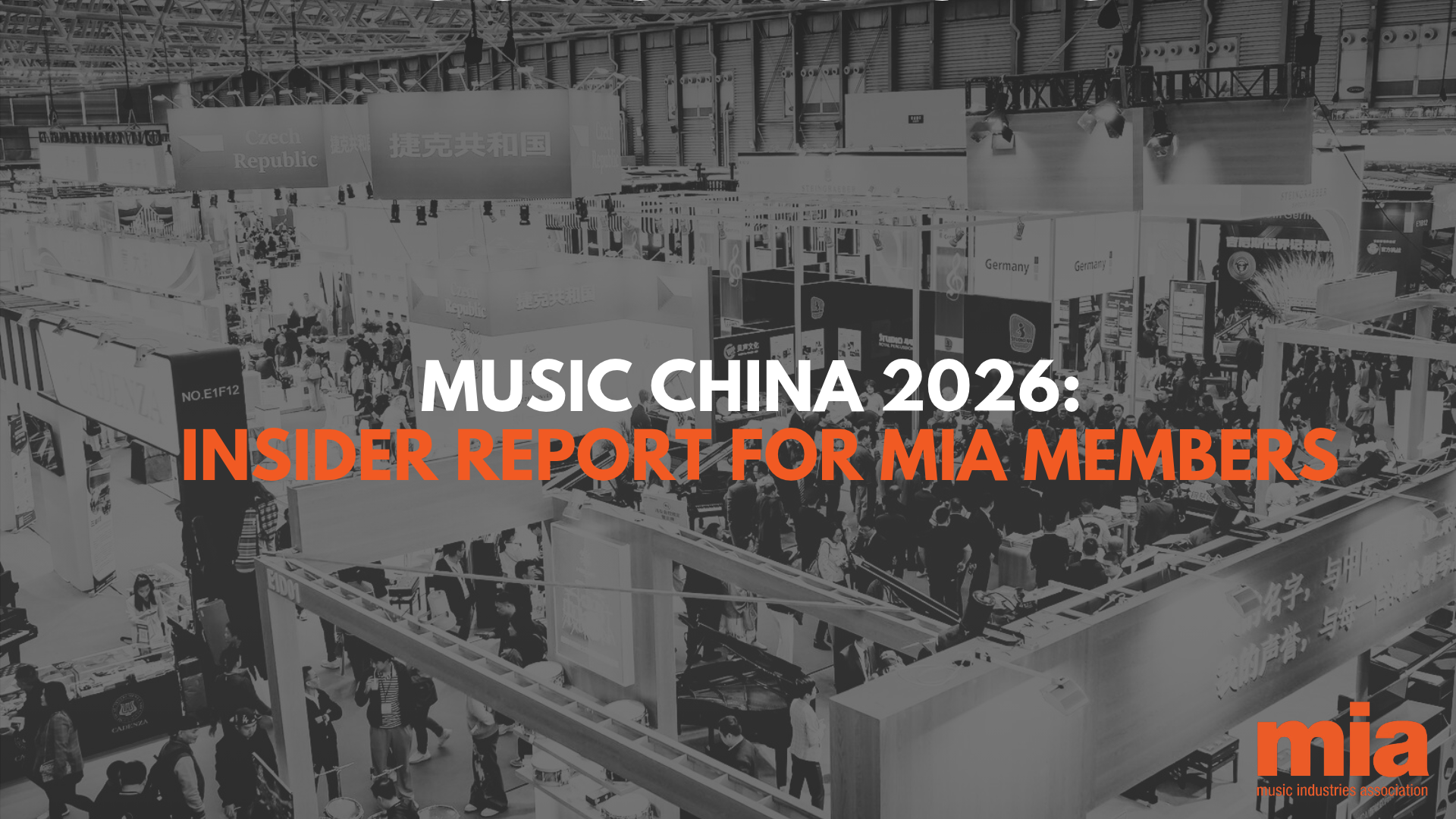

Music China 2026 took place against a difficult trading backdrop. Yet my experience in Shanghai reinforced the commercial value of attending: meeting suppliers, spending time with customers and developing relationships that can lead to business over several years.
Held at the Shanghai New International Expo Centre from 28–31 October 2026, the show reflected the pressures facing the musical instrument industry. Affordability, supply chain pressures and uncertainty over international trade policy continue to make trading difficult. The easing of competitive pressures in UK and EU retail during the second half of 2025 has faded.
The challenges for non-Chinese brands in China appear particularly acute. Major distributors are privately reporting year-on-year declines of 40–70% in domestic sales of these brands, depending on the segment. These are individual distributor reports, rather than a measure of the Chinese market as a whole.
On the supply side, weaker global demand is prompting factories to seek new partners. With sourcing costs also rising, brands are exploring opportunities to renegotiate prices or move production within China. For businesses reviewing their supply arrangements, time spent with existing and potential partners can be especially useful.
Some international brands had reduced their presence at the show, a pattern we have also seen at NAMM and elsewhere. The pressure to control costs is understandable. My concern is that withdrawing from these events can weaken relationships within our sector and reduce our understanding of our customers’ changing needs. In a market prone to sharp peaks and troughs, maintaining those personal connections matters.
Footfall appeared lower to me than in previous years, and the exhibitor presence felt smaller. Chinese manufacturers were nevertheless there in strength. Many that previously supplied other companies were now presenting brands of their own and seeking international partners. The show also explored opportunities in music education, AI, health and wellness. It felt more domestically focused than at its international peak, but there is still substantial potential in China over the longer term.
As one UK industry insider told me, “visitors who are at this show really want to be here – it is a more focused audience.” That observation captured something of the quality of the conversations taking place.
It was pleasing to see a strong British presence. Many companies like ours combine Music China with visits to suppliers and customers across Asia, making one trip serve several purposes. British companies were represented on the show floor, through local partners and in meetings in the Kerry Lounge and Tulip Club. The opportunity to meet UK colleagues alongside international contacts adds to the value of the visit. Some Australasian distributors also appear to be alternating between NAMM and Music China, making it useful to understand where key contacts plan to attend.
The UK pavilions included ABRSM, Trinity College London, RSL Awards, Nuvo, Paxman, pBone Music and Denis Wick. The MIDI Association presented developments in accessibility alongside its work on MIDI 2.0. Yamaha’s impressive pavilion demonstrated its commitment to innovation and music education, with a presentation of its products tailored to a domestic audience.
Trade shows inevitably come under scrutiny when marketing budgets are tight. The business case needs to account for travel, accommodation and staff time as well as exhibition fees. But it should also recognise that the return may take longer to emerge than an order placed during the show.
Sharing parenting tips about teenage daughters of similar ages can be as valuable to a relationship as discussing Generative Engine Optimisation. Chatting over a beer or at breakfast with people working in different parts of the industry can also reveal commercial opportunities that would be difficult to find through a scheduled sales call.
I am a believer in this approach because I have seen its long-term personal and commercial benefits. Ultimately it builds and maintains trust.
Music China returns from 14–17 October 2027. NAMM takes place in Anaheim, California, from 26–30 January 2027. With 2027 budget planning underway, consider how the intangible nature of a trade show will achieve tangible benefits for your business. In my experience, the commercial value of these relationships often becomes clear well beyond the show itself.
Steven Greenall is founder and CEO of Warwick Music, creators of the award-winning pBone plastic trombone. Warwick Music received the Queen’s Award for Enterprise in Innovation in 2019 and has been recognised as a UK Export Champion. Steven is a former Chair of the Music Industries Association, a trustee of Music Mark and the MIA’s representative on the European Soundmakers confederation.